

Request a representative visit or G7 15 Day or G7 samples


Improving outcomes for kids with diabetes*,1-4

Proven outcomes for better management in pediatric patients with type 1 diabetes*,1-4
Exceptional accuracy in the moments that matter most for young patients with type 1 diabetes5
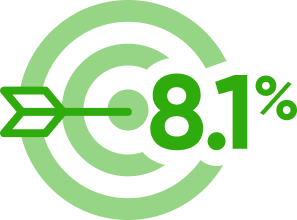
MARD
Industry-leading MARD in pediatrics6

48%4,7
Reduction in hypoglycemic events in children aged 2-7 years

11.1%†,3,4
Increase in TIP within 8 weeks
Most accurate in all rates or change in pediatrics, a population which is highly vulnerable and likely to experience glycemic variability8,9
A clear connection: Dexcom-powered AID leads to improved outcomes, as shown in two real-world studies10,11
The CLIO study showed that Dexcom-powered AID reduced severe hypoglycemia and diabetic ketoacidosis‡,10
9.31
severe hypoglycemia events on Tandem CIQ & Dexcom G7
Vs.
19.31
historically
1.93
DKA events on Tandem CIQ & Dexcom G7
Vs.
12.81
historically
A real-world study in >22,000 pediatric Dexcom-powered Omnipod users showed11:
>90%
met TIR targets for hypoglycemia§,||
2 out of 3 had a TIR over
60%§
#1 prescribed CGM for children with type 1 diabetes12

Dexcom CGM offers multiple features to help protect your pediatric patients:
- Urgent Low Soon
- 12-hour grace period
- Delay First High Alert
- Rise rate
- Dexcom Follow¶
- Fall rate

When used to share glucose data with one or more followers, Dexcom Follow is associated with13:
- Lower mean glucose
- More time spent in range
- Less time in hyper- and hypoglycemia
- Significantly higher CGM utilization

Request Samples
Get your patients started for free today

Pharmacy Coverage
Easily check your patient’s pharmacy coverage for Dexcom CGM

Ready to Prescribe?
Get your patients started with a Dexcom G7 CGM
AID=automated insulin delivery; CGM=continuous glucose monitoring; DKA=diabetic ketoacidosis; MARD=mean absolute relative difference; TIR=time in range.
*Compared to SMBG. †Results obtained with a previous generation Dexcom CGM system and are applicable to G6/G7 given similar feature sets and better performance and usability. ‡Adverse events were reported monthly over 12 months and were compared to historical data from the T1D Exchange. Patient-reported outcomes were assessed quarterly. All study visits were virtual. §N=9028 using the time-weighted average target of 110 mg/dL. ||Hypoglycemia consensus target of <4% time below 70 mg/dL. ¶Separate Follow app and internet connection required.
1 Laffel LM, et al. JAMA. 2020;323(23):2388-2396. 2 Van Name MA, et al. J Diabetes Sci Technol. 2023;17(4):976-987. 3 Thabit H, et al. Diabetes Care. 2020;43(10):2537-2543. 4 Welsh JB, et al. J Diabetes Sci Technol. 2024;18(1):143-147. 5 Dexcom G7 User Guide. 6 Dexcom, Data on File, 2023. Dexcom; 2023. 7 DiMeglio LA, et al. Diabetes Care. 2021;44(2):464-472. 8 U.S. Food and Drug Administration, 510(k) Substantial Equivalence Determination Decision Summary, K213919. Published December 7, 2022. www.accessdata.fda.gov/cdrh_docs/reviews/K213919.pdf. 9 U.S. Food and Drug Administration, 510(k) Substantial Equivalence Determination Decision Summary, K222447. Published March 3, 2023. www.accessdata.fda.gov/cdrh_docs/reviews/K222447.pdf. 10 Graham R, et al. Diabetes Technol Ther. 2024;26(1):6. 11 Forlenza GP, et al. Diabetes Technol Ther. 2024;26(8):514-525. 12 Data on file (VV-06651). Dexcom; 2025. 13 Welsh JB, et al. Diabetes Therapy. 2019.10(2).751-755.
MAT-11244